David Yurman
Site Design & Design System
Luxury at platform scale.
Same components, different theater.
Site Design & Design System
Luxury at platform scale.
Same components, different theater.
Overview
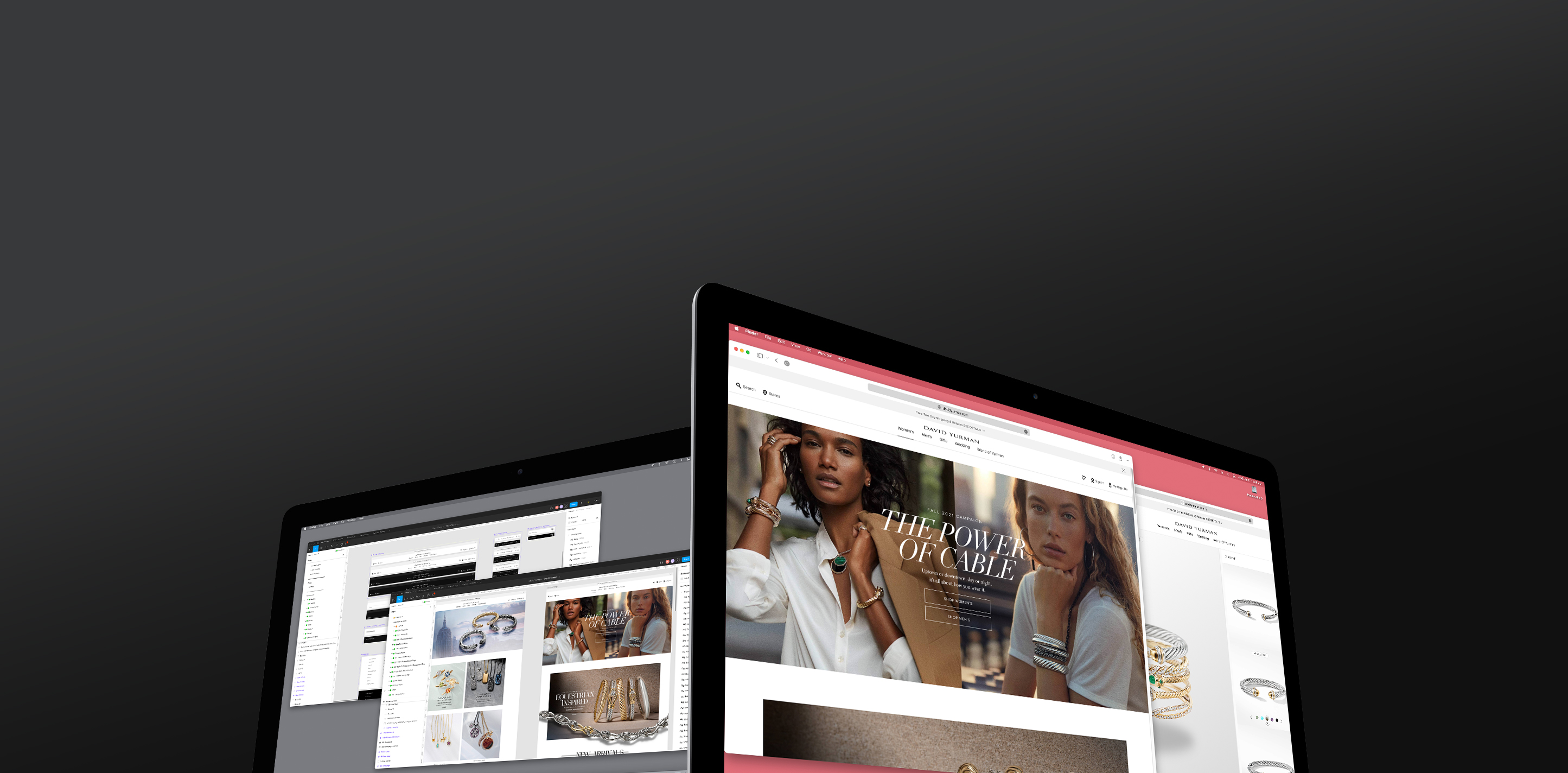
David Yurman was migrating their eCommerce site from SAP Commerce to Salesforce Commerce Cloud — a platform shift with significant implications for how the design system needed to be structured. The goal wasn’t just to rebuild the site. It was to build a Figma design system that mapped directly to the SFCC component library, so that design intent could translate into production without getting lost in handoff.
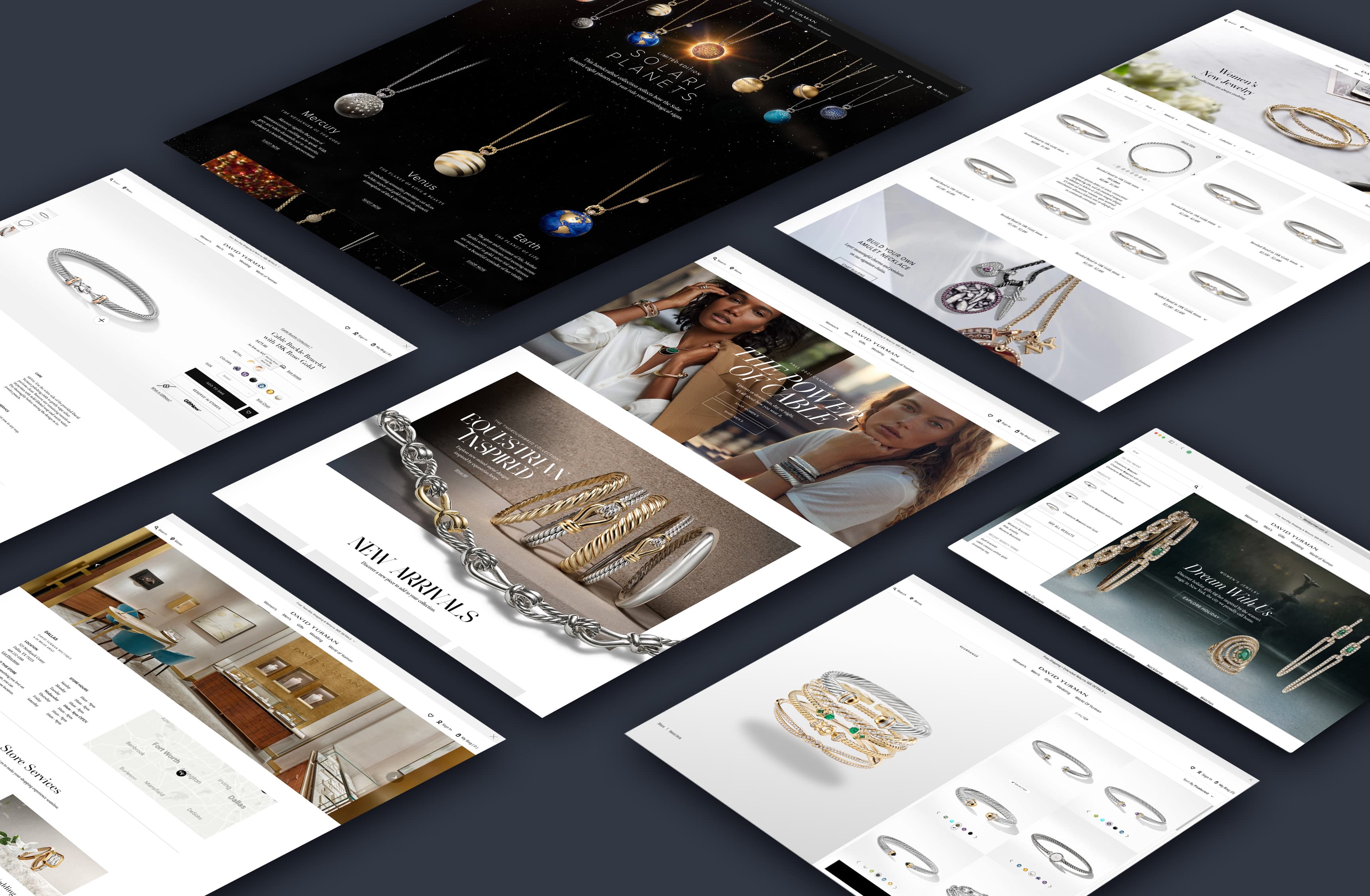
Luxury at platform scale is a specific problem. The components have to be flexible enough to work across categories — jewelry, watches, accessories, editorial — while maintaining the premium, considered feel that defines the David Yurman brand at every touchpoint.
The System
The design system was built in Figma with a direct correspondence to the SFCC component architecture. Every component in Figma had an annotated equivalent in the platform, with properties mapped explicitly: padding values, breakpoint behavior, token names.
This mapping work is unglamorous and absolutely critical. It’s the difference between a design system that guides development and one that gets ignored by it. When engineers can see exactly how a Figma variant corresponds to a SFCC instance, the conversation changes. You stop negotiating about what something should look like and start talking about how to ship it.
The annotation standard we developed became a template for subsequent engagements. Not because we mandated it — because it worked, and engineers started requesting it.
The Configurators
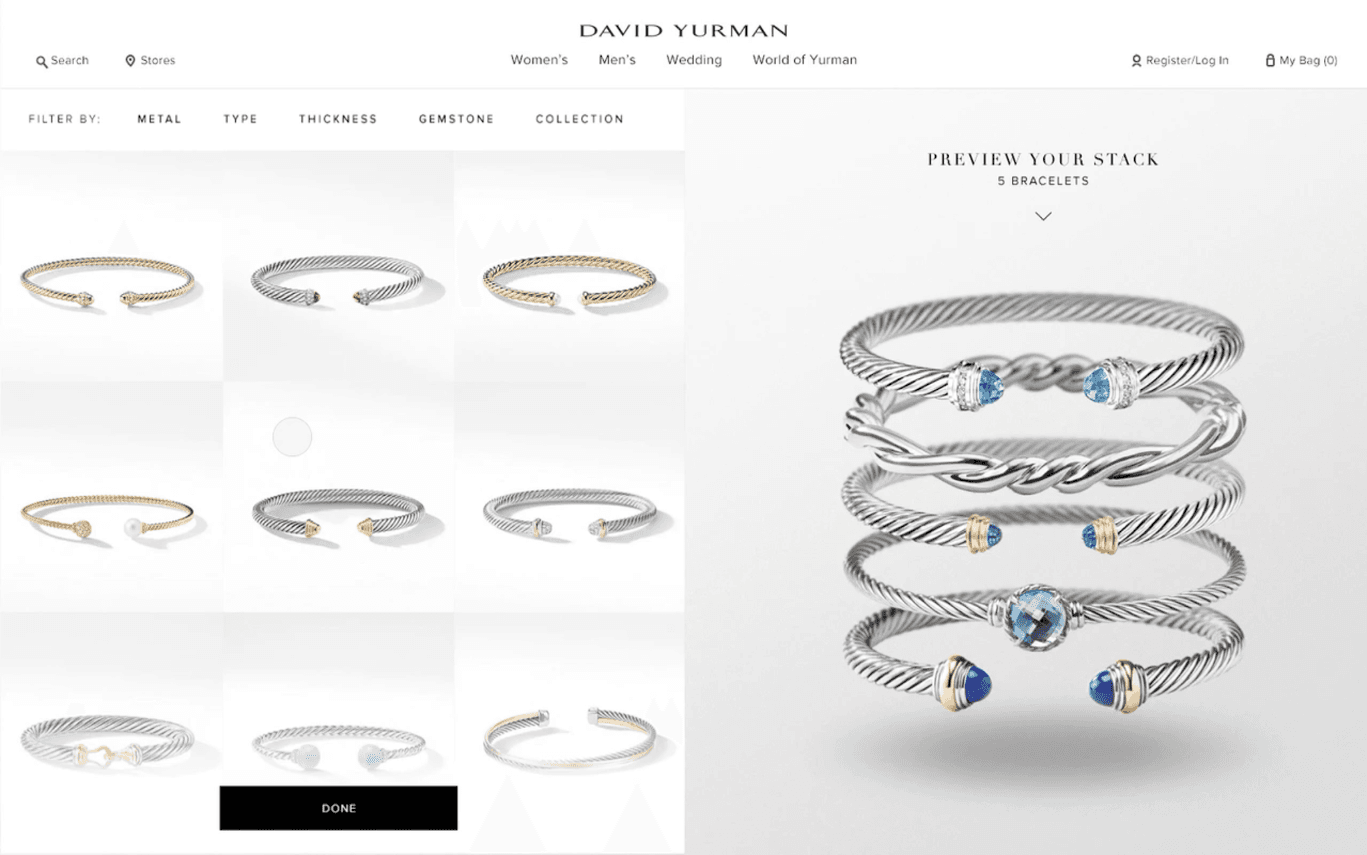
The most interesting design challenge was the product configurators — the Bracelet Stacker and the Amulet Builder. These are interactive tools that let customers combine multiple pieces into a personal composition before purchasing.
Same components, different theater. The bracelet stacker presents cable bracelets as stackable bands with a physical, layered metaphor. The amulet builder presents pendants as a curated collection with an editorial, gallery metaphor. The underlying component system is identical. The interaction model and visual language are entirely different.
That’s the system working. Not a different design for every product type — a flexible system that can express different characters from the same infrastructure. The engineering team builds it once. The design team styles it per category.
Earning Trust
The most important outcome of this engagement had nothing to do with a deliverable. David Yurman’s team continued using the Figma design system after the engagement ended — without us. They extended it. They trained new designers on it. They used the annotation standards as a model for their own documentation.
That’s the success metric for a design system: does it outlast the people who built it? David Yurman’s did.
The role I played on this engagement is the role I try to play on every engagement. Not the owner of the design — the catalyst. I bring clarity to what the system needs to be, build the foundation that the team can extend, and then get out of the way. The design system shouldn’t depend on me. It should make the team more capable without me.