

DAVID YURMAN // SITE DESIGN & DESIGN SYSTEM / Design Leadership and Collaboration
David Yurman: Designing Luxury at Platform Scale

Overview
Luxury brands don't want to feel like platforms, and I don't blame them. But as VP and Executive Creative Director at Smith Commerce, it was my responsibility to help David Yurman get there regardless.
DY was migrating from SAP Commerce to Salesforce Commerce Cloud (SFCC). The internal team was as talented as any I'd worked with. They didn't need help being creative. They needed a partner who could honor their brand while rebuilding the commerce engine underneath it. SFCC provides enormous power: proven patterns, reliable checkout, a component model built for scale. The tension is that none of that should be visible to a customer shopping for jewelry.
The System
Moving from SAP Commerce to SFCC wasn't a reskin. It was a full re-architecture of the site's components and what the design team could do within the platform going forward.
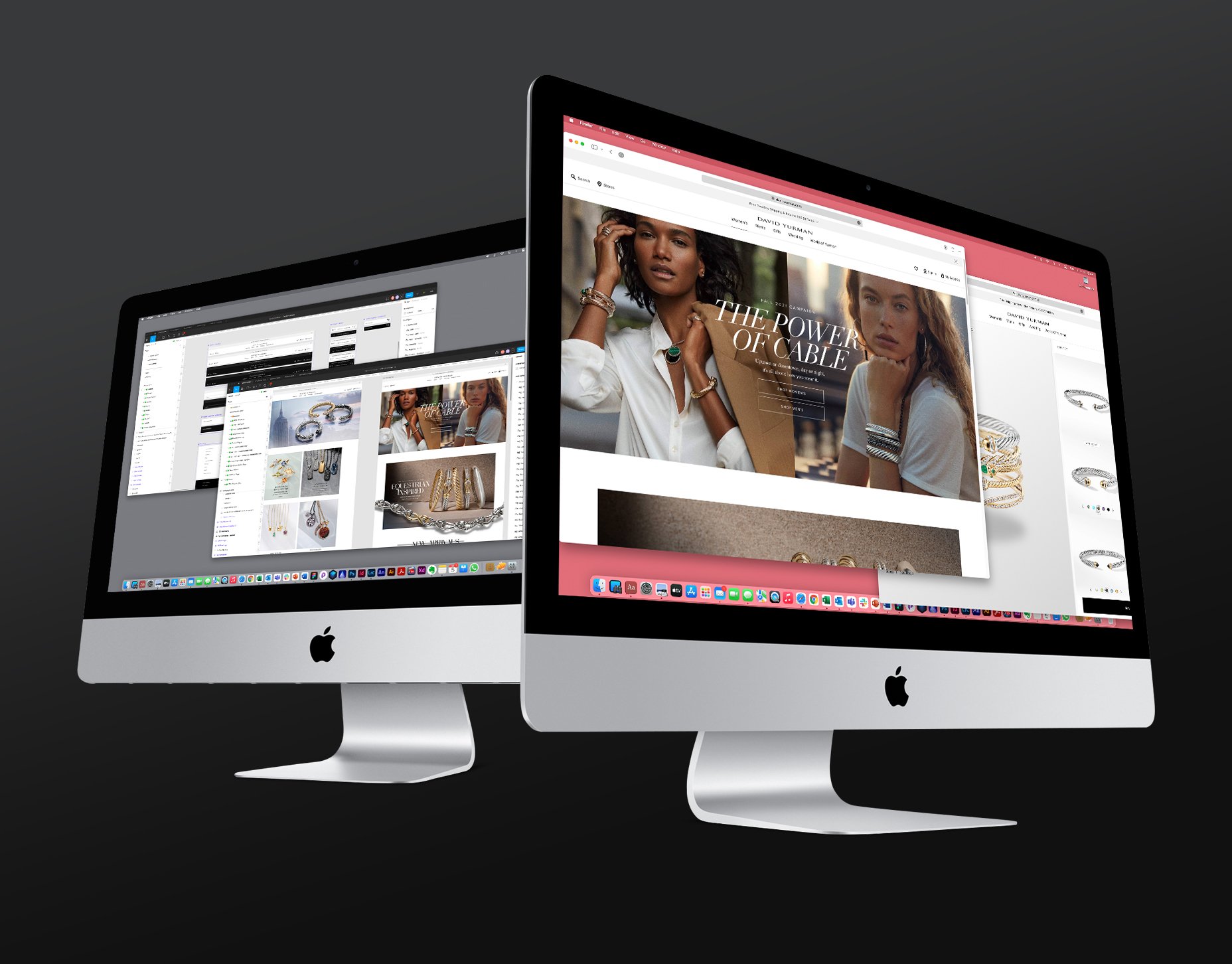
I built the design system so every component mapped directly to what was possible within their SFCC instance. Not aspirational Figma concepts. Every element had a direct line to what the technology team could build.
Page templates defined layout architecture. Components lived as self-contained units with documented variants. Product cards handled variable image ratios, finishes, and price ranges—all while maintaining the David Yurman aesthetic.
The team wasn't familiar with Figma. I provided training, positioning myself as catalyst, not owner. They were talented designers learning a new tool.
They used it beautifully.
The Configurators
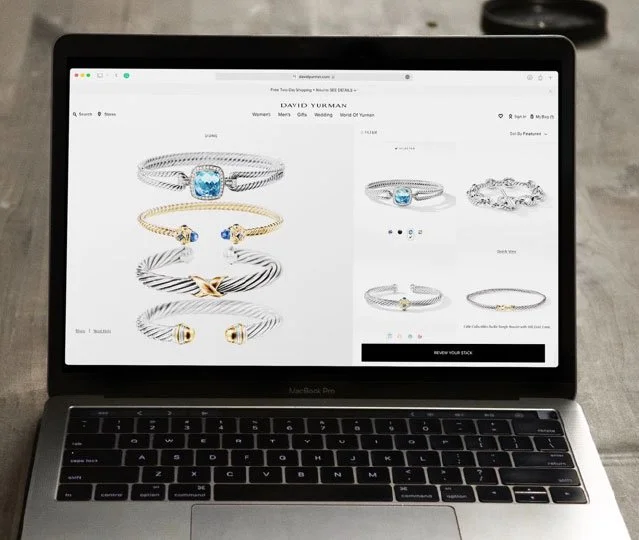
Beyond the core site, we built two sales tools: the Bracelet Stacker and the Amulet Builder. DY's sales strategy leaned into accumulation: the more bracelets you owned, the more expressive the combination. The configurators needed to feel theatrical, but they still leveraged the same product card components powering the rest of the catalog. I styled the cards to a darker theme that signaled "you're in creative mode now" without requiring a separate component library.
Same components. Different theater. That's the system working.
Earning Trust
When the build reached visual QA, the DY team was deep in other work and asked us to handle it. I built the QA process: annotation standards, review criteria, the distinction between brand deviation and build variance. A brand this protective doesn't delegate unless they trust the partner to see what they'd see.
That trust came from positioning ourselves as catalysts, not owners, through every component review and presentation.
The best design systems don't constrain a brand. They carry standards into every new page, every future designer's hands. The DY team still uses the system we built. That's my measure: not the launch, but whether the system outlasts the engagement.
